

An on-the-ground reflection on education, unemployment, and the enduring influence of Ubuntu in South Africa.
by Greg Cunningham
The Uneven Pace of Social Progress
Shaping the Future of South Africa
It’s easy to think that when the social agenda progresses in the United States, it also progresses across the world. For example, women in the US gained the right to vote in 1920, and most women in the UK gained the same right in 1918. But it is ironic that just as the civil rights movement was progressing in the US, the apartheid movement in South Africa was gaining hold, and would remain the law of the land until 1990, when Nelson Mandela was released from prison. When it comes to human rights, the world does not always move at the same pace.
Youth Disengagement and Unemployment in South Africa
Many young voters in South Africa never experienced apartheid and did not live through the atrocities their parents and grandparents experienced– and died fighting to change. But the party of Mandela is now viewed by many in South Africa as the party of corruption and dishonesty, and it is causing disengagement among voters under 35. This part of the population should be the most motivated to vote for change, as the unemployment rate in the demographic is around 40%. Around 90% will not go to college, and many will never graduate high school. It is a country ripe for a groundswell of youth to rise up and raise their voices and their votes. Yet few have seemed inclined to do so.
Inside Heathfield High School
One person is setting out to change that. This past summer, I had a chance to visit with Nadia Annhuizen, principal at the Heathfield School in Cape Town. Students (called learners in South Africa) pay the equivalent of $160 per year to attend the school. Just about all were black. Many struggled with basic skills. The average class size was 44. One class we visited was bursting with 56 learners!

All of the students were incredibly polite, but most, if not all, will not attend college. The principal had been there less than a year and was dedicated to changing the culture at the school, and the students seemed to be buying in. She was a force striding down the halls, interacting with students and solving problems as she walked.
Engagement as a Catalyst for Change
The potential of the students was on full display in a drafting class (almost like a pre-architecture course). The students were engaged and excited about their class work. It is engagement like this that Annhuizen continues to seek, setting a goal of a 100% pass rate in math for state exams. She explained that the more students are engaged in an activity, the better the chance they will come to school.
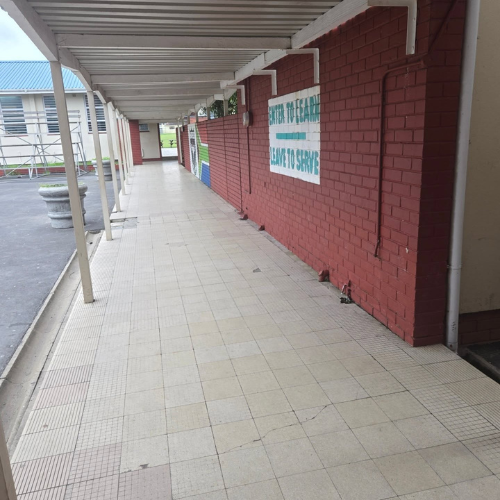
She coaches the volleyball team and coached a team at her last school to a regional championship. She welcomes every opportunity when it walks through the door, including the person who drove us to the school: she hit him up for a professional development day about time management for her teachers while he was there.
The Reality of Langa Township
Engagement of the youth in South Africa seemed to be all we heard when asking about government or politics. Considering that as many as 60% of those under 24 are unemployed, it’s understandable why engagement is on everyone’s mind. While walking around the Langa Township, there was a pervasive sense of idleness among the youth, as many sit outside or hang out in small groups most of the day. 60% unemployment leaves them with nothing else to do.

Annhuizen hopes that getting students engaged in high school will increase the number who attend university and raise the number of youths who have jobs. If young people are accustomed to being engaged, she asserts, it will lead to more engagement in their community, where real change is needed.
As we celebrate Black History Month in the United States, we can observe the lingering legacy of Apartheid in South Africa still today. Segregation, while no longer the law of the land, is still very much in practice, with most black students going to government run schools and most white students attending more prestigious, and more expensive, private schools. Blacks live in Townships, some still run by gangs and corrupt bosses, while most whites live in the downtown areas of cities or wealthy suburbs. The laws have changed, but social progress has advanced at a rate between sluggish and static. As for the youth of the country, they don’t see a path toward any type of social progress or personal success.
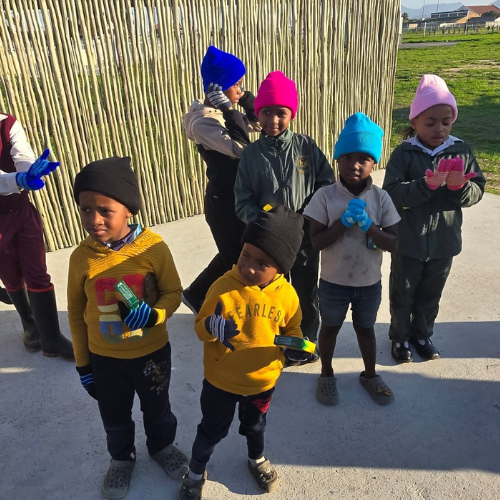
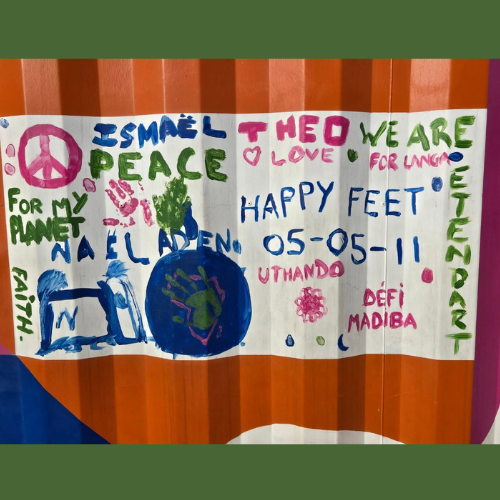
But there is hope. There are people like Nadia Annhuizen, struggling to wrangle change one school at a time. In the Langa Township, we also met Siviwe Mbinda, who founded the program Happy Feet, an organization that provides a safe after school environment for the children of his community. His students dance the afternoon away, and their talent is immediately obvious.
Ubuntu: A Philosophy of Shared Responsibility
What you hear most from so many people seeking change is the concept of Ubuntu, the understanding that we are all connected to each other. These folks, and the many more seeking positive change I met in South Africa this past summer, are to be celebrated, not just for one month of tribute but all year ’ round.
They are the change they wish to see.
Greg Cunningham is a JFYNet Blended Learning Specialist and a world traveler.
Other posts authored by Greg can be found here.
HOW ARE WE DOING? In our pursuit to serve up content that matters to you, we ask that you take a couple of minutes to let us know how we’re doing? Please click here to be navigated to our JFYNet Satisfaction Survey. Thank you!