Hands-on. Practical. Grounded in real teaching.
by Michael Mino
Educators are being inundated with AI training — but much of it doesn’t translate into real classroom impact.
Too often, these experiences rely on passive formats of video lectures or slide decks that leave teachers asking: Now what?
So, what does meaningful, useful AI learning for educators actually look like?
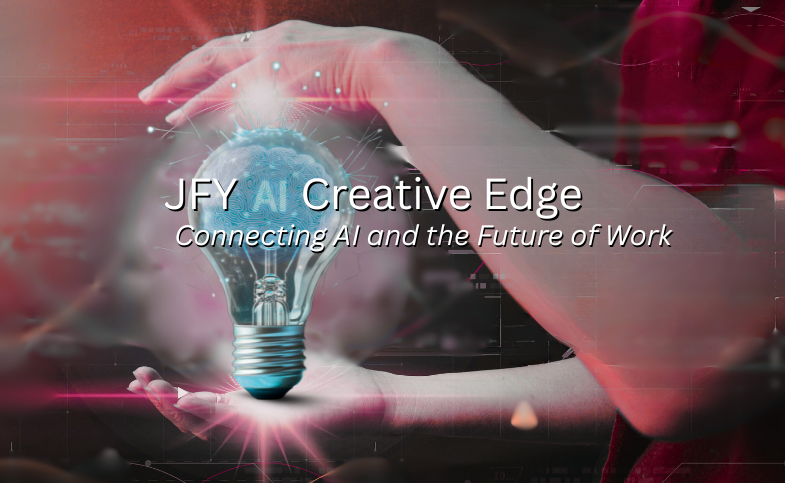
This spring, JFY’s AI Creative Edge pilot set out to explore that question.
Creative Edge is the first in a series of courses focused on the creative application of AI in teaching and learning. It’s part of JFY’s AI Leadership Institute — a multi-track program designed to equip educators with the knowledge, tools, and strategies for responsible and effective AI integration.
The pilot brought educators into a collaborative, hands-on learning experience centered on creativity, experimentation, and reflection. Participants explored emerging AI tools, considered how those tools could fit into their professional practice, and engaged in ongoing dialogue about opportunities and challenges.
Weekly Zoom sessions combined tool demonstrations with opportunities for participants to share, critique, and reflect on their work together.
By the end of the course, the feedback pointed in a clear direction: educators are looking for practical AI learning that connects directly to teaching, supports student engagement, and prepares for s the future their students are heading into.
From learning to classroom application
A clear takeaway from participant feedback was how quickly educators began applying what they learned.
Several participants pointed to Gemini AI for research and multimedia creation. Others found NotebookLM’s infographic and content-generation capabilities especially useful. Over the six-week pilot period, participants described real classroom uses and immediate next steps during each session.
One educator shared that they had already created NotebookLM materials for the works of Shakespeare, along with flashcards and practice quizzes. Another described using the course to think through how students could use NotebookLM for research in design classes while also creating AI-supported video projects.
These responses reflect what educators are looking for: tools they can bring into practice right away, with clear relevance to their subject areas.
Expanding creativity with AI
The pilot helped broaden participants’ view of creativity with AI.
One participant wrote that the course showed AI can support creativity in ways that go “beyond just text.” Another noted that AI-generated materials are now accessible enough to add “another layer to a lesson.”
These comments point to an important shift. AI can enter classrooms not only through writing tools, but through multimedia creation, visual design, music, voice, research support, and new forms of student expression.
A shift in perspective
For some participants, the course sparked a larger professional turning point.
One educator shared that they had been concerned about AI in education for some time, and came away feeling a strong responsibility to adapt their practice so students are prepared for what lies ahead. That participant described a “huge shift” in their thinking, including plans to reassess lessons and curriculum and to build AI-focused learning into their teaching.
That sense of impact comes through powerfully in this note from a high school ELA teacher:
“Just wanted to thank you and JFYNet for allowing me to be a part of this pilot. I found it extremely informative and eye-opening. As a veteran teacher with over 20 years, I feel it has been one of the most useful courses I’ve taken in a very long time. I immediately started to think about how I can incorporate the ideas and have already started to utilize some of the sources.”
Feedback like this speaks to the value of giving educators time and space to explore new tools in thoughtful ways — and how strongly this work resonates with experienced teachers who are actively rethinking what effective practice looks like today.
Ethics, judgment, and responsible use
Another major theme in the survey was the importance of ethics, judgment, and responsible use.
Participants appreciated the chance to reflect on how AI should be used in education, where caution is needed, and how these concerns can be presented to students. One participant wrote, “I am still reflecting on what is ethical versus what is possible.” Another said they valued discussing the ethics of AI across different contexts and could see themselves engaging students in those conversations as well.
Educators are navigating a fast-changing landscape. They are looking for professional learning that supports creativity, while also strengthening discernment and responsible decision-making.
What educators want next
Participants were also candid about what would help future versions of the course.
Time was the biggest barrier — no surprise for working educators balancing full schedules and competing demands. Some respondents also asked for more examples, more demonstrations, and more feedback during the learning process.
This input offers a clear roadmap for strengthening future iterations while staying grounded in what educators actually want and need.
What this pilot confirms
The Creative Edge pilot showed that educators are eager for AI learning that is hands-on, relevant, and connected to a labor market where creativity, technology, and human judgment are increasingly intertwined.
They are looking for
- practical tools
- guided experimentation
- opportunities for peer collaboration
- thoughtful conversations about ethics and student readiness
At JFY, this is an encouraging signal. Educators are ready to engage more deeply with these questions and with each other.
The pilot also provides strong validation of the Creative Edge course content. The feedback shows real energy and points to real need for a hands-on, project-based approach. That’s exactly what JFY’s AI Leadership Institute offers.
Learn more about the Creative Edge training program and upcoming opportunities:
Michael Mino is a JFYNetWorks AI Specialist.
Other posts authored by Michael can be found here.
HOW ARE WE DOING? In our pursuit to serve up content that matters to you, we ask that you take a couple of minutes to let us know how we’re doing? Please click here to be navigated to our JFYNet Satisfaction Survey. Thank you!